The Australian Association of Vertical Transport (AAVT) has written to the Prime Minister and all Australian state and territory jurisdictions seeking recognition of the vertical transport industry as an essential service in the event of escalating fuel supply disruptions.
The correspondence was issued in response to emerging concerns regarding fuel availability and the potential impact that restrictions could have on the ability of vertical transport businesses to continue delivering critical services across Australia.
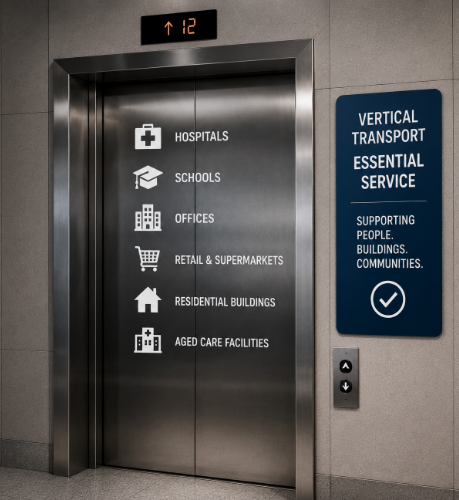
In its submissions, AAVT highlighted that lifts, escalators and moving walkways play a vital role in supporting the safety, accessibility and operation of essential community infrastructure, including hospitals, aged care facilities, retirement villages, medical centres, public transport infrastructure, emergency services, welfare institutions and correctional facilities.
AAVT noted that vertical transport systems operate on a 24/7 basis and that restrictions on fuel availability could significantly affect the ability of industry personnel to attend sites to install, maintain, repair or refurbish equipment where urgent safety or operational issues arise.
The Association also emphasised the important role vertical transport plays in supporting emergency response activities, accessibility for people with mobility limitations, and the safe movement of occupants within multi-storey buildings.
AAVT has received acknowledgements from a number of jurisdictions, with several ministerial offices advising that the industry’s concerns would be considered as part of any future decisions relating to fuel restrictions or emergency response measures.
The responses also acknowledged that AAVT would continue to be kept informed and considered in relation to any future developments or decisions impacting the sector.
Chief Executive Officer of AAVT, Mark Liversedge, said the Association’s priority was ensuring the industry could continue supporting public safety and essential building operations should supply conditions worsen.
“Vertical transport infrastructure is embedded throughout critical community and emergency infrastructure across Australia. Ensuring continued industry access to fuel during periods of disruption is important to maintaining essential services and supporting public safety outcomes,” he said.
AAVT will continue to monitor developments and engage with governments and relevant authorities as required.
For more information, please contact [email protected]